
Now Reading: Climate Migration: The Silent Global Crisis You Haven’t Heard About
-
01
Climate Migration: The Silent Global Crisis You Haven’t Heard About
Climate Migration: The Silent Global Crisis You Haven’t Heard About

Introduction
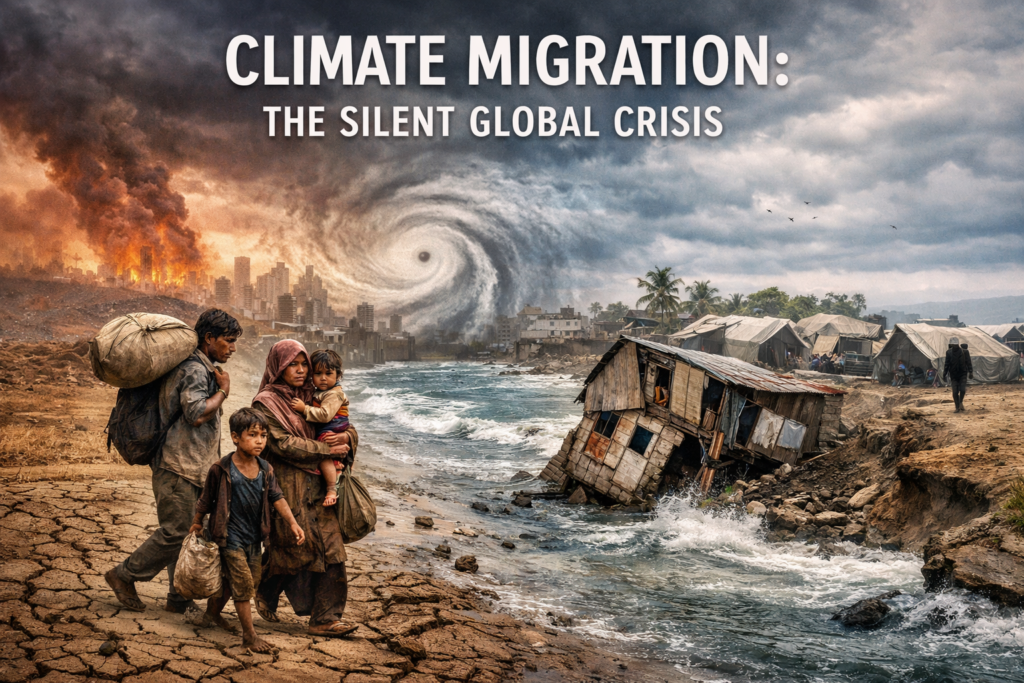
On the outskirts of Dhaka, Bangladesh, the Rahman family faces the harsh reality of the climate migration crisis. Rising floodwaters have swallowed their ancestral land, forcing them to leave their home. Moreover, extreme weather events destroy homes and livelihoods more frequently each year. As a result, millions worldwide experience displacement annually. Therefore, governments and communities must address climate-driven migration urgently.
Human Faces of Climate Displacement
Climate migration is an emerging crisis, driven by environmental changes such as rising sea levels, extreme weather events, and prolonged droughts. Yet, despite affecting millions of lives, it remains largely invisible in mainstream media.
Why This Crisis Is Underreported
Unlike voluntary economic migration or politically driven displacement, climate migration forces people to leave suddenly and under duress. For example, according to the International Organization for Migration (IOM), over 25 million people experienced displacement due to climate-related events in 2022 alone. Moreover, experts warn that these numbers could escalate drastically in the coming decades if governments and communities fail to act. As a result, many displaced populations remain vulnerable, lacking visibility, protection, and support. Therefore, addressing climate-driven migration requires urgent global attention.
The lack of media coverage stems from several factors: the remote locations of affected communities, the slow-onset nature of certain climate events, and the complex intersection of environmental, economic, and social factors that make reporting difficult.
Understanding Climate Migration
Definition and Key Drivers
Climate migration occurs when environmental pressures make it impossible for people to sustain their livelihoods in their original homes. Unlike traditional migration motivated by better opportunities, climate migration is often forced, urgent, and long-term.Major drivers include:Rising sea levels Extreme weather events Prolonged droughts and desertification Loss of arable land and liveli hoods
Types of Climate Events Causing Displacement
Rising Sea Levels
Hurricanes, typhoons, and cyclones have become more frequent and intense due to climate change. These events destroy infrastructure, homes, and livelihoods, forcing populations to relocate temporarily or permanently. For instance, Cyclone Amphan in 2020 displaced over 2.4 million people in India and Bangladesh.
Drought and Desertification
In Sub-Saharan Africa, prolonged droughts are crippling agriculture. Farmers who once sustained themselves through crop production now migrate in search of water, food, and jobs. Countries like Somalia, Ethiopia, and Sudan have witnessed internal displacement numbers exceeding 1 million annually due to climate-induced droughts.
Global Statistics and Vulnerable Regions
The Intergovernmental Panel on Climate Change (IPCC) predicts that by 2050, climate change could force between 200 million and 1 billion people to migrate globally. Vulnerable populations include those in low-income countries with fragile governance, limited infrastructure, and heavy dependence on agriculture. Regions at highest risk include:South and Southeast AsiaSub-Saharan AfricaPacific IslandsCentral America and the Caribbean
Human Stories Behind the Numbers
Case Study: Fatima’s Journey
Numbers alone cannot convey the true scale of suffering. Fatima, a mother of three from Syria, once cultivated wheat on fertile land. Years of drought reduced her harvest to nothing. Forced to leave, she walked for days with her children to reach a crowded refugee camp. Her story represents millions facing similar fates in Africa, Asia, and the Middle East.
Bangladesh’s Riverbank Erosion Crisis
Villagers along the Meghna River are forced to move inland annually as riverbank erosion swallows farmland. Families face food insecurity, children drop out of school, and women lose access to safe water. Social networks fracture, compounding the trauma of displacement.
Urban Migration and Overcrowding
Many climate migrants move to urban centers in search of work, increasing pressure on already stretched resources. Cities such as Dhaka, Jakarta, and Lagos experience overcrowded housing, strained healthcare systems, and rising unemployment due to sudden population influxes.
Why Media Underreports Climate Migration
Challenges for Journalists
Reporting on climate migration presents logistical challenges. Remote villages, lack of access to communication infrastructure, and limited funding hinder comprehensive coverage. Slow-onset disasters, unlike immediate events like earthquakes, are harder to convey in news cycles.
Focus on Short-Term Disasters
Media often prioritizes sensational coverage of hurricanes, floods, or wildfires, neglecting the long-term displacement they cause. The sustained human suffering, adaptation struggles, and community rebuilding efforts rarely make headlines.
Impact on Public Awareness and Policy
This lack of attention leads to low public awareness and limited political action. Policymakers are less pressured to implement preventive strategies, legal protections, or disaster preparedness programs for affected populations.
Political, Economic, and Social Implications
Cross-Border Tensions and Resource Pressure
Climate migration can exacerbate tensions between migrants and host communities. Overcrowded cities, stretched resources, and competition for jobs can lead to social unrest. Borders may be closed or tightly regulated, leaving migrants stranded or in precarious conditions.
Legal Gaps: Climate Migrants and International Law
The 1951 Refugee Convention does not cover climate migrants. Millions are left without formal protection, and governments may classify them as “economic migrants,” denying them access to aid, housing, or legal status.
Cultural and Social Disruption
Climate change not only displaces communities but also increases health risks, including heat-related illnesses, waterborne diseases, and food insecurity, as highlighted by the World Health Organization (WHO).
Solutions and Global Responsibility
Legal Recognition and Protection Frameworks
Countries need international frameworks to legally recognize climate migrants. Such policies should grant access to humanitarian aid, resettlement options, and legal protections for displaced populations.
Adaptation Strategies to Reduce Displacement
Bangladesh’s Flood Resilience Programs
Elevated housing, flood shelters, and early warning systems allow communities to remain in place during floods, reducing displacement.
Pacific Island Relocation Agreements
Some nations negotiate preemptive relocation deals with host countries to prevent catastrophic displacement as sea levels rise.
Media’s Role in Raising Awareness
Journalists play a crucial role in amplifying marginalized voices. Consistent reporting on climate migration can influence public opinion, raise awareness, and drive policy change. Storytelling that humanizes the statistics encourages global accountability.
The Urgency of Action
Current Reality vs. Future Projections
Climate migration is not a future problem—it is happening now. Millions are displaced annually due to environmental pressures, and the trend is accelerating. Ignoring this issue risks widespread humanitarian crises, economic disruption, and social unrest.
Collective Responsibility of Governments, Media, and Citizens
Global cooperation is essential. Governments must provide protection and resources, media must amplify the issue, and citizens must advocate for ethical and sustainable policies. Only coordinated action can mitigate the growing crisis.
Final Thoughts: Human Stories as a Call to Action
The Rahman family, Fatima, and countless others represent the human face of climate migration. Their stories demand our attention. The silent crisis of climate migration will define the 21st century, and it is our collective responsibility to respond with urgency, empathy, and decisive action.
h