
Now Reading: You Can’t Fix People — Focus on Yourself and Personal Growth
-
01
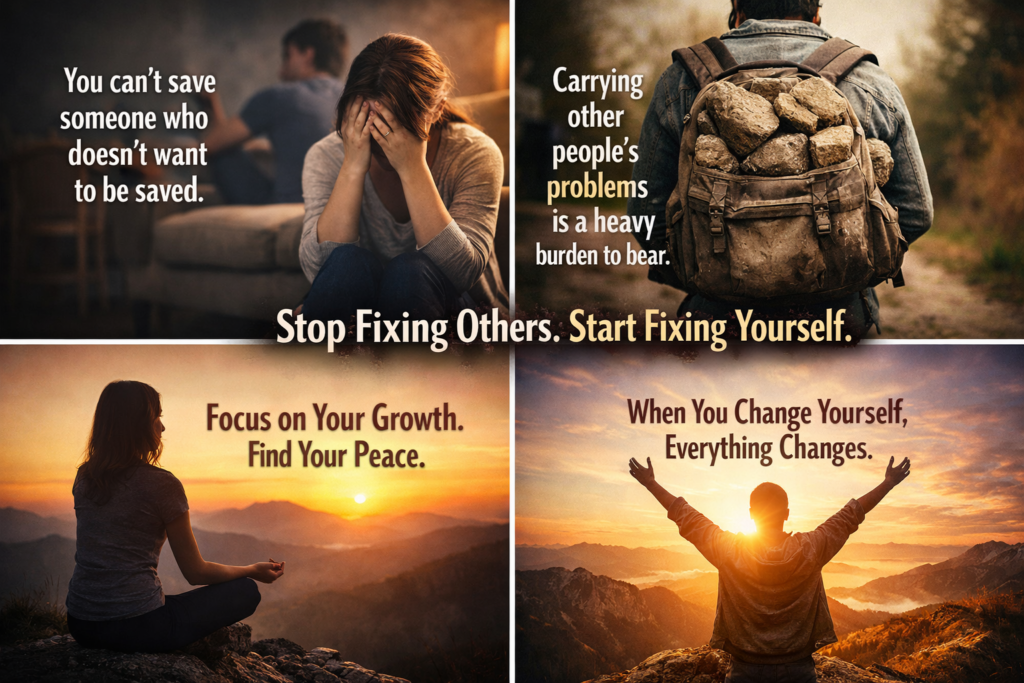
You Can’t Fix People — Focus on Yourself and Personal Growth

You Can’t Fix People — Focus on Yourself and Personal Growth
Learn why trying to fix others drains your energy and how focusing on your own growth, happiness, and boundaries can transform your life. Discover practical steps to reclaim your peace and emotional freedom.
fixing others, personal growth, self-improvement, emotional well-being, setting boundaries, acceptance, happiness, self-care, personal development, empowerment
Introduction
A large part of our lives is spent trying to help others. It often begins with good intentions. We notice a friend struggling, a partner making repeated mistakes, a colleague falling behind, or a family member stuck in old habits. Our instinct is to step in, guide, correct, and encourage. We hope that our support will inspire change, yet often, it does not.
Trying to fix others may feel noble, but it can drain your energy, patience, and emotional well-being. The truth is, change happens only when the other person is ready. Understanding this can be liberating, allowing you to focus on yourself without guilt or frustration.
The Illusion of Control
Many people operate under the illusion that they can control someone else’s decisions, emotions, or behaviors. When we care deeply, we naturally want to intervene. We give advice unasked, we point out mistakes, and we carry the emotional weight of others’ outcomes.
But life doesn’t work that way. No matter how much you care, the choices of others are theirs alone. Expecting someone to mirror your values, habits, or efforts is not only unrealistic, it’s exhausting. Accepting this reality is the first step toward reclaiming your energy.
Why Trying to Fix Others Drains You
When you constantly focus on trying to fix someone else, your mental, emotional, and physical energy suffers.
Mental Exhaustion
You spend hours analyzing behavior, planning interventions, and worrying about outcomes. Your mind is consumed by problems that aren’t yours to solve.
Emotional Burden
Feeling responsible for someone else’s happiness or decisions is heavy. It creates stress, frustration, and even resentment over time.
Relationship Tension
Attempts to “help” can backfire, causing arguments, resistance, or emotional distance. Instead of strengthening relationships, they may weaken them.
Trying to control others is like carrying a backpack filled with stones that aren’t yours. It’s unnecessary, avoidable, and tiring.
The Power of Focusing on Yourself
Shifting attention from others to yourself can transform your life.
Personal Growth
When you focus on self-improvement, you build confidence, emotional resilience, and clarity. Your energy goes into productive and rewarding habits instead of being wasted on controlling others.
Strong Boundaries
Focusing on yourself strengthens your boundaries. You stop tolerating toxic behaviors and unnecessary drama. This makes your relationships healthier and more balanced.
Peace and Control
Your energy is no longer consumed by trying to manage others. You gain inner peace and a sense of control over your own life. Ironically, this self-growth can inspire others to reflect on their own behavior—but only as a natural side effect, not as the primary goal.
Image Placeholder 1: Person meditating peacefully on a hilltop at sunrise
Real-Life Examples
Personal Relationships
You might have a friend or partner you tried to “fix.” Maybe you pointed out mistakes repeatedly, guided them through decisions, or sacrificed your own happiness in the hope that your efforts would matter. Despite this, little or nothing changed. Focusing on your own growth—through hobbies, self-care, or pursuing personal goals—can change your perspective. You become calmer, more confident, and your presence alone can influence others indirectly.
Workplace Dynamics
At work, helping colleagues improve or covering responsibilities they neglect often has limited effect. Focusing on your own performance, skill development, and professional reputation brings long-term benefits. Your success can serve as inspiration, but it is not your responsibility to enforce change in others.
Family Situations
Families can be complex. Parents, siblings, or relatives may resist guidance. Change is their choice. Recognizing this frees you from guilt and frustration. Concentrate on nurturing your own emotional well-being and boundaries rather than trying to fix the entire family dynamic.
Image Placeholder 2: Individual sitting with a journal reflecting and writing thoughts
The Freedom of Acceptance
Acceptance does not mean giving up. It means acknowledging reality and avoiding the waste of energy on things beyond your control.
- People change only on their own terms
- You cannot control others’ emotions or choices
- Your focus should be on your own growth
This acceptance creates emotional freedom. It allows you to prioritize happiness, engage in healthier relationships, and invest energy in what truly matters: your own life.
How to Stop Trying to Fix Others
- Recognize Your Limits
You cannot control someone else’s choices. Accept this truth. - Set Boundaries
Protect your time and emotional energy. Learn to say no when necessary. - Invest in Yourself
Focus on skills, health, personal growth, and goals that matter to you. - Detach from Outcomes
You can provide guidance or support, but your self-worth should not depend on how others respond. - Practice Patience
Change, if it happens, will follow their timeline, not yours.
Image Placeholder 3: Someone letting go of emotional baggage, visualized as dropping a backpack
Emotional Takeaways
Trying to fix others is a form of emotional overextension. Focusing on yourself is an act of self-love. Growth is contagious, but change must be voluntary. Your peace, clarity, and happiness matter more than forcing someone else’s growth. The strongest people focus on themselves while navigating relationships with calmness and clarity.
Image Placeholder 4: Balanced lifestyle scene showing someone working calmly at a desk while ignoring distractions
Conclusion
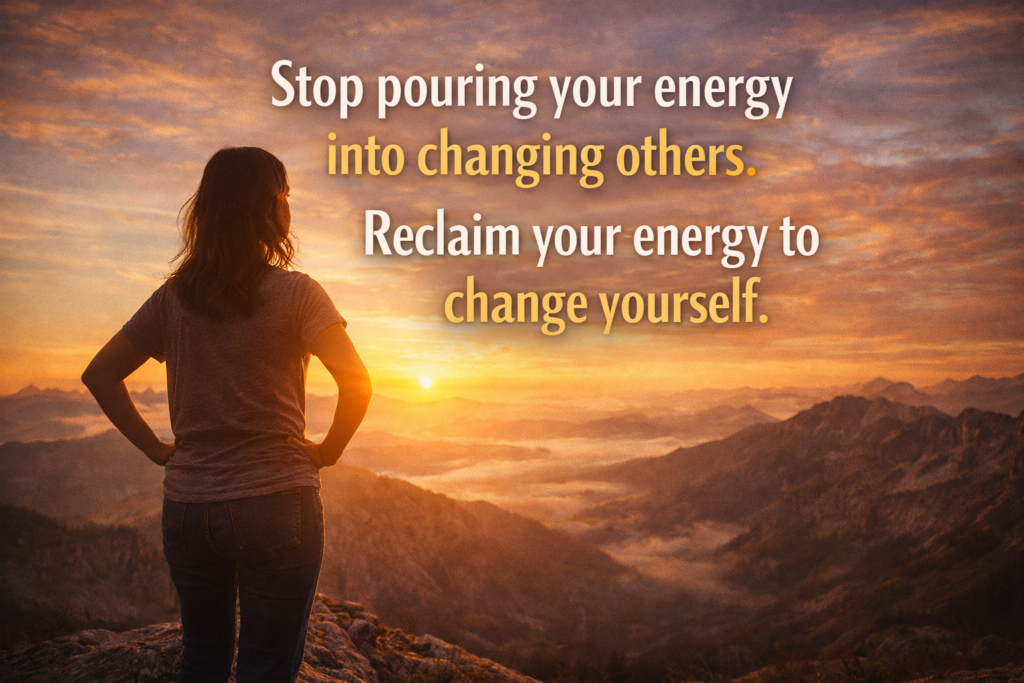
People choose their own paths. You cannot force their growth. But you can always choose your own growth, your peace, and your clarity. Becoming the best version of yourself is the most powerful decision you can make. The change you hope to see in others may or may not happen, and that’s okay. What truly matters is living an empowered life aligned with your values and personal choices.
















Kathryn Wilewski
Very interesting article and very true! People don’t want to change and don’t appreciate those that want to change them. Concentrate on self!
selioaraa selioaraa
Thanks Katherine ❤️